
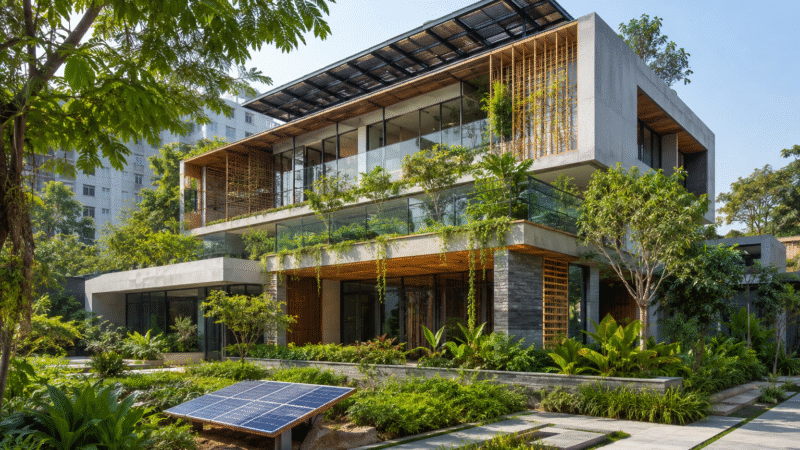
India’s construction industry is experiencing a major transformation. As cities expand and environmental concerns grow, architects, developers, and homeowners are looking beyond traditional building methods. Today, sustainable architecture is no longer a niche concept it’s becoming a necessity.
From energy-efficient homes to eco-friendly commercial spaces, sustainable design is redefining how buildings are planned, constructed, and operated across the country.
At Esthetics India, we believe that the future of construction lies in creating spaces that are not only beautiful and functional but also environmentally responsible.
Why Sustainability Matters More Than Ever
India is one of the fastest urbanizing nations in the world. With increasing demand for housing, offices, and infrastructure, the construction sector consumes significant amounts of energy, water, and raw materials.
Traditional construction practices often contribute to:
- High energy consumption
- Excessive water usage
- Increased carbon emissions
- Construction waste
- Environmental degradation
Sustainable architecture addresses these challenges by focusing on resource efficiency, environmental responsibility, and long-term performance.
How Sustainable Architecture Is Changing Construction in India
The growing adoption of green building principles is transforming the way projects are designed and executed.
Instead of simply constructing buildings, architects are now creating environments that work in harmony with nature.
Energy-Efficient Building Design
Modern sustainable buildings are designed to maximize natural light and ventilation. Thoughtful orientation, shading systems, and insulated materials help reduce dependence on artificial lighting and air conditioning.
As a result, building owners benefit from lower energy bills and reduced environmental impact.
Smart Use of Sustainable Materials
One of the biggest changes in the industry is the shift toward eco-friendly construction materials.
These may include:
- Recycled steel
- Fly ash bricks
- Bamboo
- Reclaimed wood
- Low-VOC paints
- Sustainable concrete alternatives
Using such materials helps reduce the environmental footprint of construction while maintaining durability and quality.
How Sustainable Architecture Is Changing Construction in India Through Water Conservation
Water scarcity is becoming a major concern in many parts of India.
Sustainable buildings are increasingly incorporating:
- Rainwater harvesting systems
- Water-efficient fixtures
- Greywater recycling
- Landscape irrigation management
These solutions significantly reduce water consumption and support long-term sustainability.
Green Buildings Are Becoming a Smart Investment
Many developers once viewed sustainable construction as expensive. Today, that perception is changing rapidly.
Green buildings often provide:
- Lower operational costs
- Higher property value
- Improved occupant comfort
- Better indoor air quality
- Long-term savings
As awareness grows, buyers and tenants are increasingly willing to pay a premium for environmentally responsible properties.
Technology Is Accelerating Sustainable Construction
Innovation is playing a crucial role in the growth of sustainable architecture.
Advanced technologies such as:
- Building Information Modeling (BIM)
- Smart energy management systems
- Solar energy integration
- Automated lighting controls
- High-performance glazing
are helping developers improve efficiency while reducing waste and operating costs.
The combination of technology and sustainability is setting new standards for modern construction.
The Rise of Green Certifications in India
Green building certifications are encouraging developers to adopt sustainable practices.
Popular certifications include:
- IGBC (Indian Green Building Council)
- GRIHA (Green Rating for Integrated Habitat Assessment)
- LEED (Leadership in Energy and Environmental Design)
These frameworks provide guidelines that help ensure buildings meet recognized environmental performance standards.
The Role of Sustainable Architecture in Future Indian Cities
As India continues to develop smart cities and modern urban infrastructure, sustainability will play a critical role in urban planning.
Future-ready buildings will focus on:
- Reduced carbon emissions
- Renewable energy integration
- Efficient resource management
- Improved occupant wellness
- Climate-resilient design
Sustainable architecture is no longer just about protecting the environment—it is about creating healthier, more resilient communities.
How Esthetics India Supports Sustainable Design
At Esthetics India, we understand that great architecture should balance aesthetics, functionality, and sustainability.
Our approach focuses on designing spaces that maximize efficiency, enhance user experience, and minimize environmental impact. By integrating sustainable principles into every stage of design and construction, we help clients create future-ready buildings that deliver long-term value.
Final Thoughts
The construction industry in India is undergoing a significant shift, and sustainable architecture is leading the way. From energy efficiency and water conservation to smart technologies and green materials, sustainable design is transforming how buildings are created and experienced.
As environmental awareness continues to grow, sustainable architecture will become an essential part of India’s development journey. For developers, businesses, and homeowners alike, investing in sustainable design today means building a smarter and more resilient future tomorrow.
Frequently Asked Questions (FAQs)
1. What is sustainable architecture?
Sustainable architecture is a design approach that focuses on minimizing environmental impact while improving energy efficiency, resource conservation, and occupant well-being.
2. How does sustainable architecture benefit building owners?
It helps reduce energy and water costs, improves indoor comfort, increases property value, and lowers long-term maintenance expenses.
3. Are sustainable buildings more expensive to construct?
Initial costs may be slightly higher in some cases, but long-term savings from reduced operational expenses often outweigh the upfront investment.
4. What are some examples of sustainable building features?
Solar panels, rainwater harvesting systems, natural ventilation, energy-efficient lighting, green roofs, and eco-friendly construction materials are common examples.
5. Why is sustainable architecture important for India?
With rapid urbanization, resource scarcity, and climate challenges, sustainable architecture helps create environmentally responsible, efficient, and future-ready buildings.
Leave a Reply