
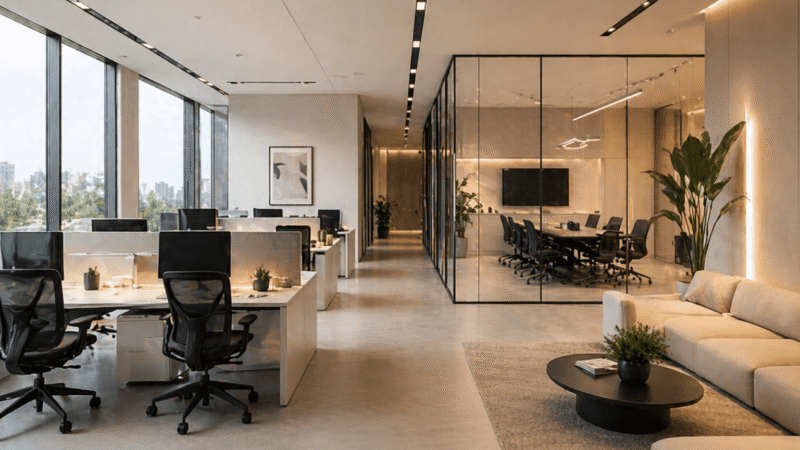
Why Minimal Design Is Dominating Modern Offices has become one of the most important conversations in contemporary workplace design. Walk into any newly designed corporate office today, and you’ll notice a clear transformation to clean layouts, uncluttered desks, neutral colors, and thoughtfully curated spaces replacing heavy furniture and overcrowded interiors.
This shift is not just about aesthetics. It reflects how work itself has evolved.
At Esthetics India, modern office design is approached with a deeper understanding: workplaces must support clarity, collaboration, productivity, and employee well-being. Minimal design has emerged as the natural response to these changing expectations.
Why Minimal Design Is Dominating Modern Offices Today
Offices were once designed to impress visitors rather than support employees. Large cabins, bulky furniture, and dense layouts often created visual chaos and limited flexibility.
Today’s workforce values efficiency and comfort over excess. Minimal design focuses on removing distractions and allowing the workspace to function effortlessly.
Modern businesses now understand that when environments feel calm and organized, employees think more clearly and perform better.
Minimalism in office design is less about having fewer things and more about ensuring everything has purpose.
The Evolution of Workplace Design
Work culture has changed dramatically over the past decade. Hybrid work models, digital collaboration, and flexible schedules have reshaped how offices operate.
Traditional layouts no longer support modern workflows. Companies now require:
- Adaptable workstations
- Open collaboration zones
- Quiet focus areas
- Informal meeting spaces
- Technology-integrated environments
Minimal design allows spaces to remain flexible without feeling empty. By simplifying interiors, organizations gain freedom to adapt layouts as teams grow or change.
At Esthetics India, office planning begins by understanding how teams actually work rather than following outdated design standards.
Clarity of Space Improves Productivity
One of the strongest reasons minimal design is dominating modern offices is its direct impact on productivity.
Visual clutter creates mental clutter. When employees sit in crowded environments filled with unnecessary elements, concentration naturally decreases.
Minimal workspaces provide:
- Clear sightlines
- Organized storage solutions
- Reduced visual noise
- Better workflow movement
Employees spend less time adjusting to their environment and more time focusing on meaningful work.
A thoughtfully minimal office does not feel empty; it feels intentional.
The Psychological Impact of Minimal Interiors
Modern organizations increasingly recognize the relationship between environment and mental health.
Minimal design promotes calmness through:
- Neutral color palettes
- Balanced lighting
- Open breathing spaces
- Reduced overstimulation
These factors help reduce workplace stress and fatigue.
Employees today spend long hours indoors. A well-designed minimal workspace creates mental ease, helping individuals feel more comfortable and energized throughout the day.
At Esthetics India, design decisions are guided not only by visual appeal but also by psychological comfort.
Flexibility: The Core Advantage of Minimal Offices
Businesses evolve quickly, and office environments must evolve with them.
Minimal design supports flexibility because it avoids fixed, heavy layouts. Modular furniture, open planning, and adaptable zones allow companies to reorganize spaces without major renovations.
Benefits include:
- Easy team expansion
- Multi-purpose meeting areas
- Faster workspace reconfiguration
- Efficient use of square footage
This adaptability makes minimal design practical for startups, growing enterprises, and large corporations alike.
Technology Integration Becomes Seamless
Modern offices rely heavily on technology, video conferencing, smart systems, and digital collaboration tools.
Minimal design naturally accommodates technology because it prioritizes clean lines and hidden infrastructure. Cable management, integrated screens, and wireless solutions become easier to implement in uncluttered environments.
The result is a workspace where technology supports productivity without dominating the visual experience.
At Esthetics India, technology and design are treated as complementary elements rather than separate considerations.
Minimal Design Enhances Brand Identity
Office interiors communicate a company’s values. Minimal design reflects clarity, confidence, and professionalism.
Clients walking into a minimalist office often perceive the following:
- Efficiency
- Innovation
- Modern thinking
- Organizational discipline
Rather than overwhelming visitors with decorative elements, minimal offices allow brand identity to emerge through thoughtful material choices, lighting, and spatial planning.
A clean environment sends a strong message without saying a word.
Sustainability and Minimalism Go Hand in Hand
Another reason why minimal design is dominating modern offices is sustainability.
Minimal interiors encourage responsible use of resources by:
- Reducing unnecessary materials
- Prioritizing durable finishes
- Maximizing natural light
- Improving energy efficiency
Companies increasingly seek environmentally conscious workplaces, and minimal design aligns naturally with sustainable goals.
At Esthetics India, sustainable thinking is embedded into design strategy, ensuring offices remain efficient both aesthetically and environmentally.
Collaboration Without Chaos
Open offices once aimed to encourage collaboration, but often resulted in noise and distraction. Minimal design refines this concept by creating balanced environments.
Instead of completely open spaces, modern minimal offices include the following:
- Defined collaboration zones
- Acoustic solutions
- Quiet work areas
- Informal discussion corners
This approach allows teamwork without sacrificing concentration.
Design becomes a tool that supports interaction while respecting individual work styles.
The Luxury of Simplicity
Minimal design is often misunderstood as plain or basic. In reality, simplicity requires careful planning.
Every element from furniture to lighting is selected intentionally. High-quality materials, refined finishes, and precise detailing create a subtle sense of luxury.
The absence of excess highlights craftsmanship and spatial quality.
At Esthetics India, minimal design is viewed as refined sophistication rather than reduction.
Designing for Employee Experience
Modern organizations recognize that employee satisfaction directly impacts performance and retention.
Minimal office environments contribute to better experiences by offering:
- Comfortable movement
- Visual calmness
- Natural lighting
- Organized surroundings
When employees feel comfortable in their workplace, creativity and engagement naturally increase.
Office design is no longer just an operational requirement; it has become a strategic business investment.
Future of Workplace Design
The growing popularity of minimal design suggests a long-term shift rather than a temporary trend.
Future offices will likely continue emphasizing the following:
- Human-centered planning
- Flexible environments
- Wellness-focused interiors
- Technology integration
- Sustainable materials
Minimal design provides the foundation for these evolving needs, making it a lasting direction in commercial architecture.
Final Thoughts
Why Minimal Design Is Dominating Modern Offices ultimately comes down to one idea: intentionality. Businesses today seek spaces that support productivity, reflect brand identity, and enhance employee well-being without unnecessary complexity.
Minimal design achieves this balance by focusing on what truly matters: space, light, function, and human experience.
At Esthetics India, modern office interiors are designed not simply to look impressive but to work intelligently for the people who use them every day.
Because the most successful workplaces are not the ones filled with more elements but the ones thoughtfully designed with purpose, clarity, and simplicity at their core.
Leave a Reply