
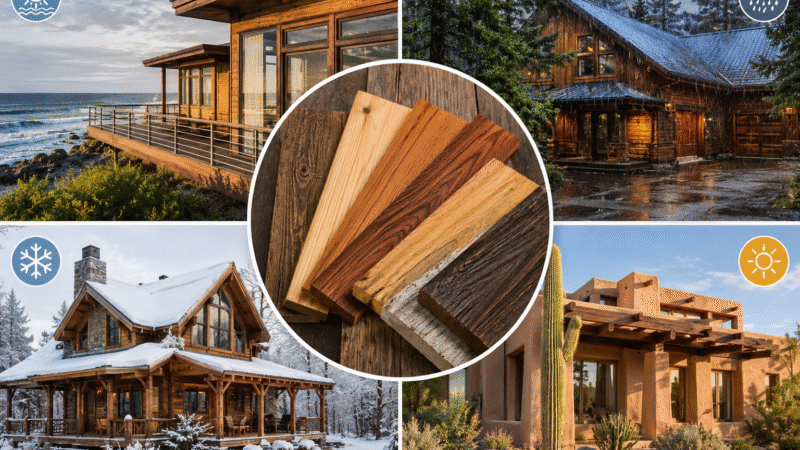
Your home’s exterior is its first line of defense against nature. Whether it’s scorching summer heat, heavy rainfall, coastal humidity, or freezing winters, the material you choose determines not only your home’s appearance but also its long-term durability.
Wood has remained one of the most desirable exterior materials for centuries because of its warmth, natural beauty, and timeless appeal. However, not every wood species performs equally in every climate. Choosing the wrong material may lead to warping, cracking, fading, fungal growth, insect attacks, and expensive maintenance.
Selecting the ideal wood is not just about aesthetics it’s about understanding how climate affects performance and making informed decisions that protect your investment.
At Esthetics India, we believe beautiful exteriors should also be durable, sustainable, and practical. This guide explains everything homeowners, architects, builders, and designers should know before selecting exterior wood for any project.
Why Climate Matters When Choosing Exterior Wood
Wood is a natural material that continuously reacts to its surrounding environment. Temperature, moisture, sunlight, humidity, and seasonal changes all influence its performance over time.
Choosing wood without considering the climate often results in:
- Surface cracking
- Moisture absorption
- Swelling and shrinking
- Colour fading
- Rot and decay
- Mold formation
- Increased maintenance costs
Instead, selecting wood suited to local weather conditions significantly improves longevity while reducing maintenance.
Understanding Different Climate Zones
Before selecting a material, identify the environmental conditions your building experiences throughout the year.
Hot & Dry Climate
Common Characteristics
- Strong UV exposure
- High daytime temperatures
- Low humidity
- Large temperature differences between day and night
Challenges
- Surface fading
- Wood shrinkage
- Hairline cracks
- Colour changes
Recommended Characteristics
Choose woods with:
- High density
- UV resistance
- Dimensional stability
- Low moisture movement
These materials retain their shape while resisting harsh sunlight.
Hot & Humid Climate
Humidity creates one of the biggest challenges for exterior wood.
Common Problems include:
- Swelling
- Fungus
- Mildew
- Insect attack
- Surface discoloration
Homes located near coastal regions or tropical climates require naturally durable hardwoods that resist moisture penetration.
Proper ventilation behind cladding panels also becomes essential.
Cold Climate
Snow, frost, and freezing temperatures create repeated expansion and contraction cycles.
Wood should withstand:
- Freeze-thaw movement
- Ice formation
- Moisture retention
- Seasonal contraction
Choosing dimensionally stable species helps prevent splitting during winter.
Heavy Rainfall Regions
Continuous exposure to rain increases moisture content within timber.
Ideal materials should offer:
- Excellent water resistance
- Natural oils
- Dense grain structure
- Rot resistance
Proper installation is equally important to ensure water drains efficiently.
Factors to Consider Before Selecting Exterior Wood
Choosing wood involves much more than colour and grain.
Professional architects usually evaluate several technical aspects before making recommendations.
1. Durability
The lifespan of wood depends on its natural resistance to moisture, insects, fungi and weathering.
High-density hardwoods generally outperform softwoods in demanding climates.
2. Stability
Some wood species expand and contract more than others.
Stable wood reduces:
- Cracking
- Gaps
- Panel movement
- Joint failure
This becomes particularly important for large wall installations.
3. Maintenance Requirements
Every homeowner has different expectations regarding maintenance.
Some species require:
- Annual oiling
- Regular staining
- Protective coatings
Others naturally age into an elegant silver-grey appearance with minimal maintenance.
Understanding this difference helps avoid unexpected long-term costs.
4. Sustainability
Environmentally responsible construction continues to gain importance worldwide.
Look for responsibly sourced timber certified through recognized forestry programs.
Sustainable materials contribute to greener buildings while supporting responsible forest management.
Popular Wood Options for Exterior Applications
Below are some commonly used wood species and their ideal applications.
| Wood Species | Best Climate | Durability | Maintenance |
| Teak | Tropical & Humid | Excellent | Low |
| Cedar | Cold & Moderate | Very Good | Moderate |
| Accoya | All Climates | Excellent | Very Low |
| Thermowood | Dry & Moderate | High | Low |
| Ipe | Coastal & Humid | Exceptional | Low |
| Oak | Moderate | Good | Moderate |
Each material offers unique characteristics in terms of appearance, longevity, and cost.
Selecting the right option depends on your project’s location, design goals, and maintenance preferences.
How Modern Architecture Uses Exterior Wood
Contemporary architecture has transformed how wood is incorporated into building exteriors.
Instead of traditional designs, architects now combine wood with:
- Natural stone
- Concrete
- Aluminium
- Glass
- Steel
- Textured wall finishes
This combination creates striking facades while maintaining warmth and natural character.
Many luxury homes also integrate wood into:
- Entrance elevations
- Balcony ceilings
- Pergolas
- Garden walls
- Privacy screens
- Feature facades
This balanced approach delivers a premium appearance without overwhelming the overall design.
Choosing the Right Finish
Even the highest-quality timber requires suitable finishing to maximize performance.
Popular finishing options include:
- Natural oils
- Exterior stains
- UV-resistant coatings
- Clear sealers
- Protective finishes
The appropriate finish depends on your local climate and the desired aesthetic.
A well-maintained finish significantly extends the life of exterior wood while preserving its natural beauty.
FAQs
1. Which type of exterior wood is best for humid climates?
Dense hardwoods like Teak, Ipe, and Accoya are among the best choices for humid climates because they naturally resist moisture, fungal growth, termites, and decay. These wood species offer excellent durability and require less maintenance in areas with high humidity and frequent rainfall.
2. How does climate affect the lifespan of exterior wood?
Climate plays a major role in the performance of exterior wood. Excessive sunlight can cause fading and cracking, while moisture from rain or humidity may lead to swelling, rot, and mold. Choosing wood that matches your local climate helps extend its lifespan and reduces maintenance costs.
3. What is the most durable wood for outdoor cladding and facades?
Accoya, Teak, and Ipe are considered some of the most durable woods for exterior cladding and facades. They offer exceptional resistance to weather, insects, moisture, and dimensional changes, making them ideal for long-lasting outdoor applications.
4. Does exterior wood require regular maintenance?
Yes, most exterior wood benefits from periodic maintenance to preserve its appearance and performance. Depending on the wood species and local climate, this may include cleaning, applying protective oils, stains, or UV-resistant coatings every few years to prevent weather damage.
5. How do I choose the right exterior wood for my home?
The best exterior wood depends on your climate, maintenance preferences, design style, and budget. Consider factors such as moisture resistance, durability, dimensional stability, UV protection, and sustainability before making a decision. Consulting experienced professionals like Esthetics India can help you select the most suitable wood for your project.
Leave a Reply